Archives
- 2026-04
- 2026-03
- 2026-02
- 2026-01
- 2025-12
- 2025-11
- 2025-10
- 2025-09
- 2025-03
- 2025-02
- 2025-01
- 2024-12
- 2024-11
- 2024-10
- 2024-09
- 2024-08
- 2024-07
- 2024-06
- 2024-05
- 2024-04
- 2024-03
- 2024-02
- 2024-01
- 2023-12
- 2023-11
- 2023-10
- 2023-09
- 2023-08
- 2023-06
- 2023-05
- 2023-04
- 2023-03
- 2023-02
- 2023-01
- 2022-12
- 2022-11
- 2022-10
- 2022-09
- 2022-08
- 2022-07
- 2022-06
- 2022-05
- 2022-04
- 2022-03
- 2022-02
- 2022-01
- 2021-12
- 2021-11
- 2021-10
- 2021-09
- 2021-08
- 2021-07
- 2021-06
- 2021-05
- 2021-04
- 2021-03
- 2021-02
- 2021-01
- 2020-12
- 2020-11
- 2020-10
- 2020-09
- 2020-08
- 2020-07
- 2020-06
- 2020-05
- 2020-04
- 2020-03
- 2020-02
- 2020-01
- 2019-12
- 2019-11
- 2019-10
- 2019-09
- 2019-08
- 2019-07
- 2019-06
- 2019-05
- 2019-04
- 2018-11
- 2018-10
- 2018-07
-
Culture conditions particularly temperature which affect
2020-04-10
Culture conditions (particularly temperature), which affect the pathogenicity of Y. enterocolitica (Bottone, 1997), may also impact its inhibitory properties against cysteine proteases. However, culturing the bacterial strains at 37 instead of 28 °C did not alter remarkably the inhibitory potential
-
In the pleural exudates which reflect the in
2020-04-10
In the pleural exudates, which reflect the in vivo conditions, the concentrations of CysLTs and PGE2 were quite similar. However, when cancer Rottlerin australia were cultured for 24 h, both analyses of cell culture medium and cell incubations with Ca2+ ionophore showed low levels of CysLTs. In cont
-
br No Evidence for Further ET Receptor Subtypes Further
2020-04-10
No Evidence for Further ET-Receptor Subtypes Further receptor subclassifications have been proposed including suggestions that ETB could be subdivided into ETB1, present on endothelial cells, and ETB2 on smooth muscle cells, but there currently is no evidence that the receptors expressed by these
-
Interestingly several ES cell lines are null for p possibly
2020-04-10
Interestingly, several ES cell lines are null for p53, possibly because the EWS-FLI1 chimeric protein can directly and indirectly interfere with p53 activity [38], [39]. The inhibition, loss and/or mutation of p53, one of the most common events in tumorigenesis, results in a decreased oxygen consump
-
In this paper we report the synthesis and microbiological ev
2020-04-10

In this paper, we report the synthesis and microbiological evaluation of a series of novel chromogenic sugar-based enzyme substrates based upon catechol, 2,3-dihydroxynaphthalene and 6,7-dibromo-2,3-dihydroxynaphthalene 9 cores (Fig. 1).14, 15 2,3-Dihydroxynaphthalene is inexpensive and available in
-
In contrast to chordates authentic chemokine and receptor or
2020-04-09

In contrast to chordates, authentic chemokine and receptor orthologues can be found in the agnathan fishes (Bajoghli, 2013, Kuroda et al., 2003, Nomiyama et al., 2011, Nomiyama et al., 2013); sea lamprey has at least five chemokine receptor genes, one CXCR4 (Ensembl Acc. No.: ENSPMAP00000007678) (Ku
-
The use of SP in
2020-04-09
The use of SP in IPTp may not be the only driver of parasite polymorphisms in this population, because Senegal has used sulfadoxine and/or pyrimethamine in the national antimalarial treatment plan for many years, and furthermore these drugs are still being used in antibacterial combination therapy.
-
br Introduction Prostaglandin E PGE
2020-04-09
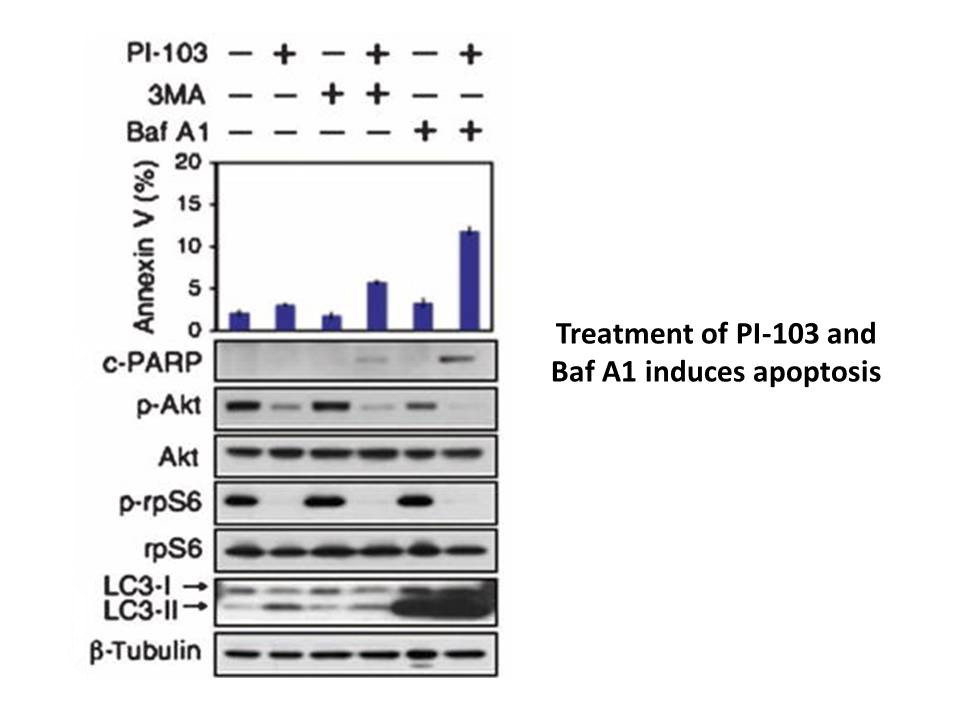
Introduction Prostaglandin E2 (PGE2) signals through 4 separate G-protein coupled receptor sub-types (EP1, EP2, EP3 and EP4) to elicit a variety of physiological and pathophysiologic effects. EP2 and EP4 increase cAMP levels in the cell via adenylate cyclase activation, whereas EP3 inhibits cAMP
-
We first confirmed LPS induction of
2020-04-09
We first confirmed LPS-induction of markers known to induce NF-κB signaling in Caco2BB cells, as established for numerous other cell types [31]. We initially selected this approach to monitor NF-κB activation instead of directly monitoring p65 as it is technically straightforward and provides both u
-
External factors such as protein partners
2020-04-09
External factors, such as protein partners, can also activate DUBs by either reinforcing the stimulatory effects of intramolecular factors or by other means. The intramolecular activation of the USP7 CD by its HUBL domain is allosterically potentiated by external factor GMP synthase (GMPS), which co
-
br NF B and STAT as Regulators
2020-04-09
NF-κB and STAT as Regulators of the CDK System While current data support the concept that CDKs augment the proinflammatory activity of NF-κB, our understanding of the function of this transcription factor system in CDK regulation remains patchy. Seminal studies showed the contribution of NF-κB t
-
br Results br Discussion Drug resistance poses
2020-04-09
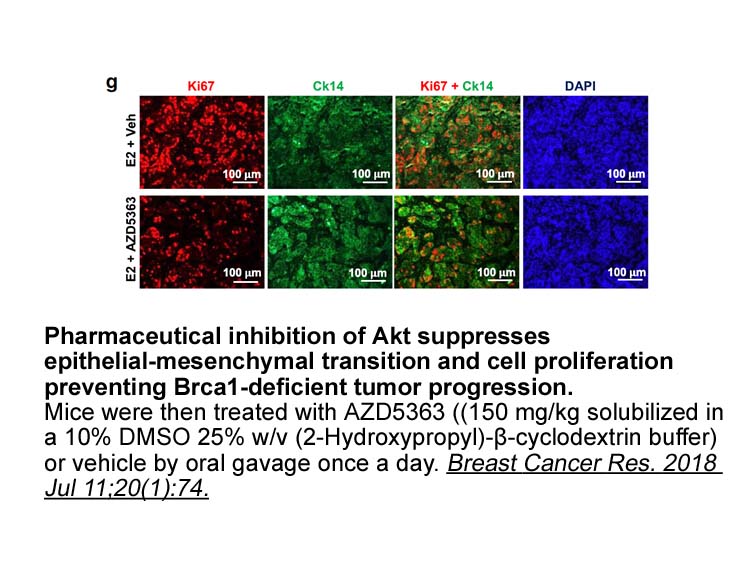
Results Discussion Drug resistance poses the greatest hurdle of achieving high efficacy with AADs in cancer patients. AAD-treated cancer patients often encounter intrinsic and evasive drug resistance that diminishes the therapeutic efficacy to only minor survival benefits in most cancer types.
-
Replacement of the saturated propoxy group
2020-04-09

Replacement of the saturated -propoxy group in compound with the unsaturated allyloxy group to obtain compound resulted in 10-fold decrease in ET receptor antagonism and more than 20-fold decrease in ET-selectivity. Analogous unsaturated allyloxy compound in the tetrazole series was found to have
-
p as a cyclin dependent
2020-04-09
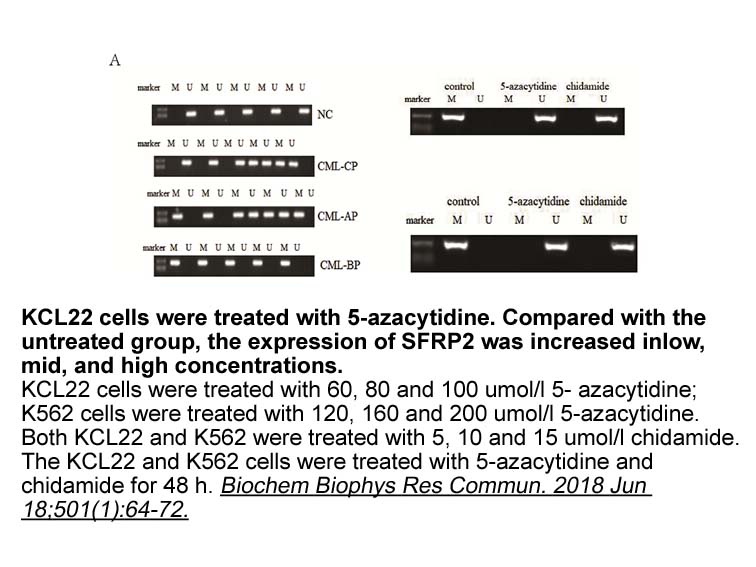
p21, as a cyclin-dependent kinase inhibitor, exert significant negative regulator of proliferation, and it could be transcriptional upregulated by p53 in order to impel transient DIDS australia arrest (Romanov et al., 2010). Using western blotting, we found that the protein expression of p21 upgrade
-
br Conclusion br Competing interests br Authors contribution
2020-04-09
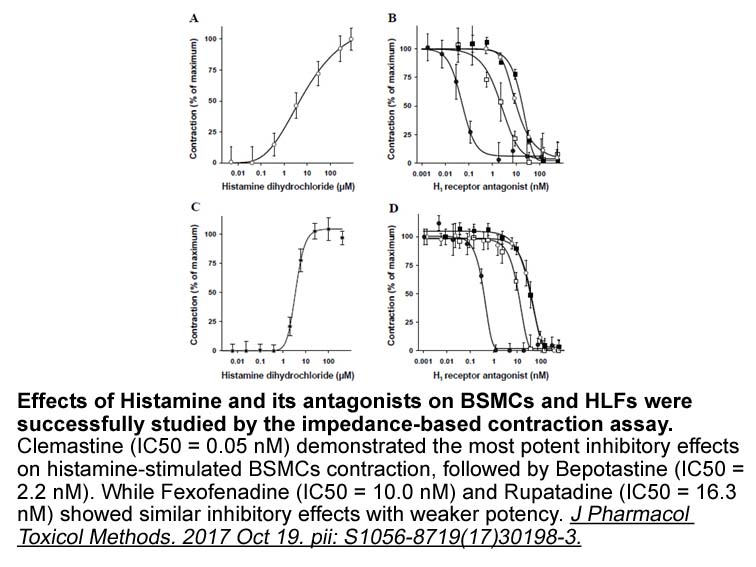
Conclusion Competing interests Authors\' contributions Acknowledgements The work was supported by Aurigene Discovery Technologies (M) Sdn. Bhd., Industrial Doctoral Program sponsorship by Ministry of Higher Education, Malaysia and research grants by the University of Malaya, grant number
15846 records 840/1057 page Previous Next First page 上5页 836837838839840 下5页 Last page